

LATAM Petrochemical Outlook 2026: Why Competitiveness Has Become the Industry’s Biggest Challenge
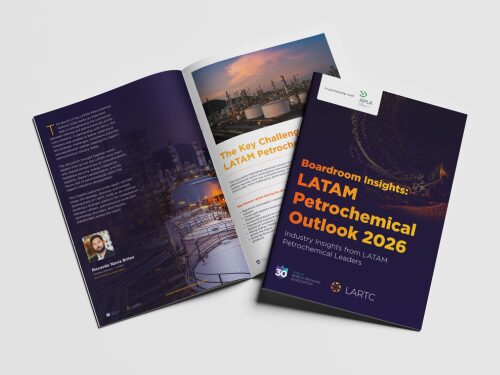
This preview is part of the LATAM Petrochemical Outlook 2026, based on discussions held at the LARTC Petrochemical Advisory Board in partnership with APLA.
Bringing together senior leaders from across Latin America’s petrochemical value chain, the session explored the strategic challenges, investment priorities and operational realities shaping the future of the region’s downstream industry.
In this preview, we explore why competitiveness emerged as one of the defining themes of the discussion, and why many industry leaders believe the operating environment is becoming structurally more challenging.
A changing competitive landscape
Throughout the Advisory Board discussion, one message surfaced repeatedly: the competitive landscape for Latin American petrochemicals is changing.
Participants pointed to a combination of global overcapacity, rising operating costs and increasing pressure on feedstock availability as factors reshaping the industry’s outlook. While none of these challenges are new individually, together they are creating a more complex operating environment for producers across the region.
Particular concern was raised around continued capacity expansion in Asia and the Middle East, which is increasing competition in global polypropylene (PP) and polyethylene (PE) markets.
Rather than competing primarily within regional markets, Latin American producers are increasingly competing with large-scale, integrated facilities that benefit from lower-cost feedstocks and significant economies of scale.
For many companies, maintaining competitiveness is becoming less about responding to short-term market cycles and more about adapting to long-term structural change.
DOWNLOAD THE FULL LATAM PETROCHEMICAL OUTLOOK 2026
Explore the complete findings from the LARTC Petrochemical Advisory Board, including additional insights on investment, feedstocks, digital transformation and refinery–petrochemical integration.
Competing on more than cost
While feedstock economics remain critical, the discussion highlighted that competitiveness today extends well beyond production costs.
Operational reliability, refinery performance, logistics, freight costs and energy efficiency all play a role in determining how effectively producers can compete in international markets.
Several participants also noted that future growth is likely to depend on moving beyond commodity products and creating greater value through specialties and downstream integration.
At the same time, attracting investment will require more than strong market fundamentals. Stable regulatory frameworks, long-term policy visibility and predictable operating environments were all identified as important factors influencing future capital allocation across the region.
These themes point towards a broader shift in how competitiveness is being defined across Latin America’s petrochemical sector.
What’s next?
Competitiveness is only one of the themes explored in the LATAM Petrochemical Outlook 2026.
The full report also examines opportunities around feedstock strategy, refinery–petrochemical integration, digital transformation, investment priorities and the long-term outlook for the industry.
Download the report to explore the complete findings from the Petrochemical Advisory Board.