

The Connected Refinery: Integration, Digitalisation and Operational Excellence
How refinery–petrochemical integration, digital twins and advanced technologies can unlock capacity, improve efficiency and maximise value from existing assets.
Part of the Latin American Refining Key Takeaways Report 2026 series, this article draws on insights shared by senior industry leaders at LARTC 2026 in Buenos Aires.
Improving efficiency and maximising the value of existing assets are key priorities for refining and petrochemical operators facing rising production volumes and potential changes in feedstock composition.
The discussion highlighted the importance of combining operational improvements with advanced technologies to increase processing capacity, address bottlenecks and strengthen competitiveness without relying exclusively on major capital investments.
Strengthening competitiveness doesn’t always mean investing in new capacity.
Advanced chemical treatment technologies can help refineries improve operating efficiency and maximise processing capacity. Optimising treatment programmes and using specialised chemicals can unlock additional performance from existing equipment, supporting operations as production levels and feedstock characteristics evolve.
These approaches illustrate how targeted interventions can complement larger investments in capacity expansion and process upgrades.
Digitalisation also offers opportunities to improve operational performance and decision-making. Digital twins can combine real-time operating information with a defined optimisation objective, such as reducing operating costs, to identify the parameters that need to be adjusted.
These recommendations can then be applied by operators, helping translate digital insights into practical operational improvements. Technology applications in refining and petrochemical plants can also support bottleneck resolution and help increase effective capacity.
Digital tools can turn real-time operational data into practical improvements in performance and efficiency.
The discussion also highlighted the importance of connecting feedstock availability with downstream processing economics. Propane derived from refinery operations can serve as a feedstock for petrochemical production, while Argentina’s growing hydrocarbon output could create additional opportunities.
However, greater feedstock availability does not automatically make new petrochemical investments commercially viable. The potential development of propane dehydrogenation (PDH) capacity illustrates the importance of minimum viable scale and market conditions when assessing new industrial projects.
Ultimately, strengthening refinery–petrochemical integration requires a combination of operational optimisation, digital capabilities and disciplined investment decisions.
Advanced treatment technologies and digital tools can help extract more value from existing assets, while feedstock integration can create opportunities for downstream development where the economics support it.
The priority is to identify practical improvements that increase efficiency and capacity while ensuring that new investments are aligned with viable production scales and market demand.
The priority is to extract more value from existing assets while ensuring new investments are aligned with viable production scales and market demand.
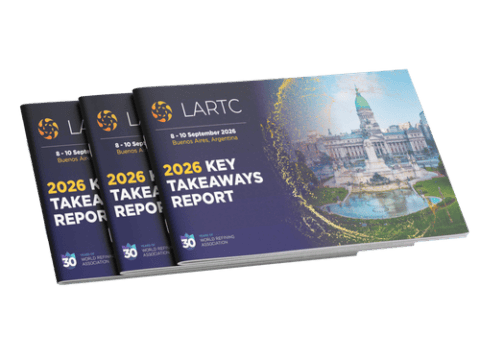
Latin American Refining Key Takeaways Report 2026
Explore further insights and perspectives shared by senior industry leaders at LARTC 2026 in the full Latin American Refining Key Takeaways Report 2026.
Up next: LARTC Ask the Experts
The conversation doesn’t end in Buenos Aires.
At LARTC Ask the Experts on 4-5 May 2027 in Rio de Janeiro Brazil, continue exploring the questions, challenges and opportunities shaping Latin America’s refining industry, with insights from experienced industry leaders.


Join Us at LARTC 2027 in Cartagena
The next Latin American Refining Technology Conference (LARTC) will return on September 7-9 2027 in Cartagena, Colombia.