
Bruno James on Airbus’ Push for SAF and Carbon Removals
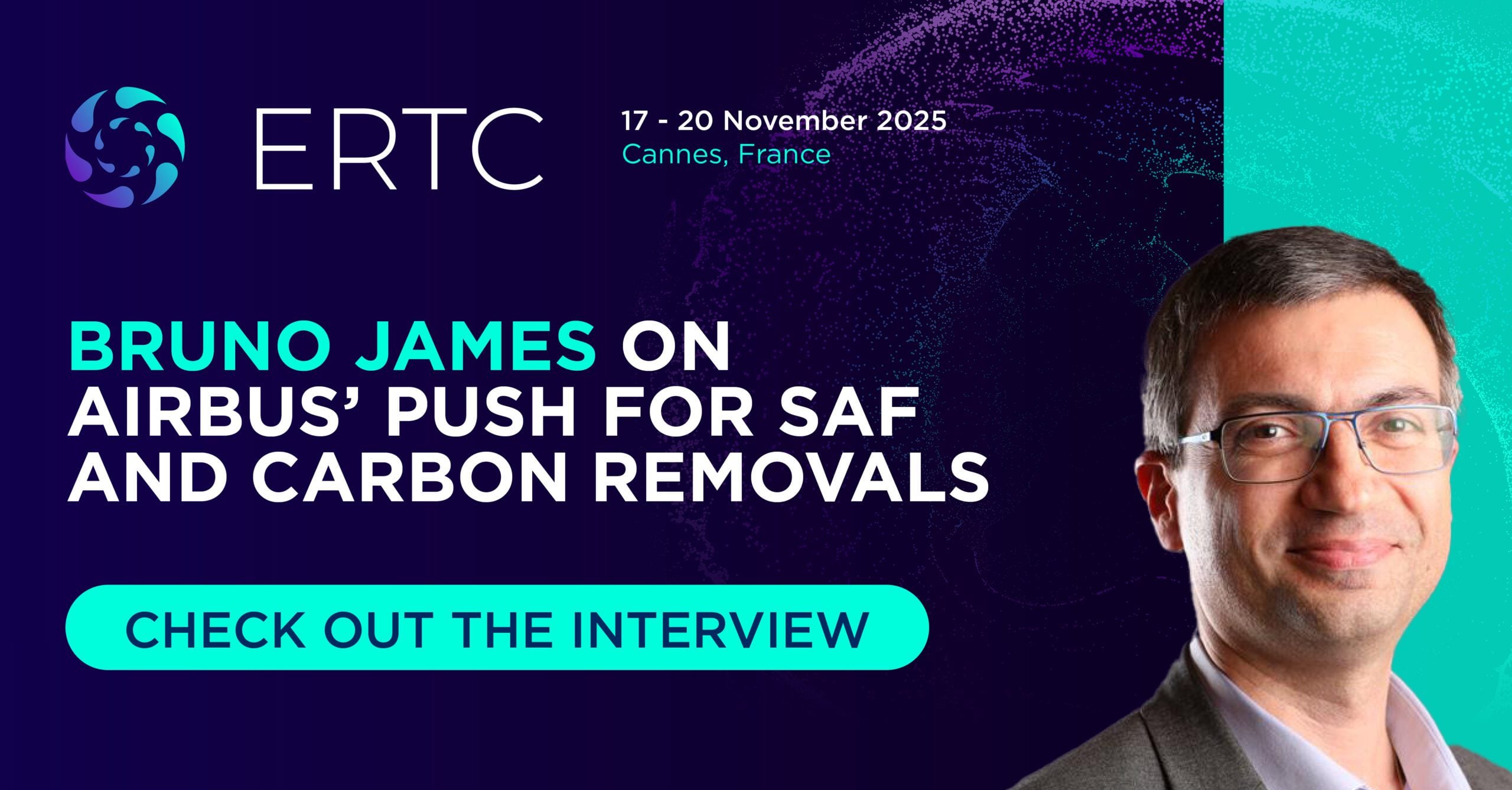
Bruno James, Head of Business Development with SAF & CDR Producers at Airbus, shares how the company is driving sustainable aviation fuel (SAF) scale-up through partnerships with refiners, energy companies, and policymakers.
He highlights Airbus’ target of 30% SAF use by 2030, its commitment to 100% SAF capability across all aircraft, and the critical role of regulatory stability in unlocking investment.
James also explains how carbon dioxide removals will complement SAF in Airbus’ broader decarbonisation strategy, and why collaboration across value chains is essential to make SAF affordable and accelerate aviation’s journey to net zero.
Airbus has been a strong advocate for increasing the production and use of sustainable aviation fuels (SAF). From your perspective, what are the most critical steps needed to accelerate large-scale SAF deployment in Europe?
Airbus is positioning itself as a catalyst to promote SAF production and uptake by airlines and investors. We aim to achieve this by leveraging cross-industry partnerships, making strategic SAF investments, and engaging in policy and regulatory advocacy.
The main challenge is accelerating the growth of the SAF market. There is both a demand and supply challenge, and regulation plays a key role in enabling the development of this emerging industry. We believe regulatory stability is paramount, as investments in a new sector like SAF require a high degree of certainty to make new projects financially viable and bankable.
In Europe, the RefuelEU initiative is in place with mandate and sub-mandates, along with SAF allowances funded by the European Union Emissions Trading System (EU ETS). The time has now come to implement these measures without hesitation.
How is Airbus collaborating with refiners, energy companies and policymakers to advance the production and adoption of SAF?
First and foremost, Airbus is advocating for the use of SAF internally. We have an agreement with TotalEnergies to cover more than half of our SAF needs in Europe, as well as a joint research and innovation programme. We have a target of using at least 30% SAF in our global fuel mix by 2030.
At an industry level, Airbus has established memorandums of understanding with European refiners OMV and Neste to advance the production and uptake of SAF. We have also invested in SAF producers in the United States and Australia, as we recognise that the transition to SAF is a global effort.
Looking forward, we are committed to having all our commercial and military aircraft and helicopters capable of being operated with up to 100% SAF by 2030. This capability will play an important role in the sector’s decarbonisation journey.
In your role, you also focus on carbon dioxide removals (CDR). How do you see it complementing SAF in Airbus’ decarbonisation journey?
Airbus views carbon dioxide removal (CDR) as a critical, complementary tool in its multifaceted decarbonisation strategy. We have four decarbonisation pillars that aim to reduce emissions at the source. These are fleet renewal, aircraft technology innovation, sustainable aviation fuels, and operational improvements. The fifth pillar, which aims to close the gap and address those emissions that cannot be fully eliminated through other means, is CO2 compensation and neutralisation.
Hear from Bruno James at ERTC 2025
-
- Day 3: 20 November, 11:35 | Keynote Panel Discussion: Sustainable Aviation Fuel (SAF) in Europe: Paving the Way for a Greener Future
>> Download the Agenda <<
What do you see as the biggest technological or supply chain barriers for SAF today – and where do you see the most promising breakthroughs?
One of the biggest challenges we are facing is making SAF affordable for airlines. Today, SAF is two to three times more expensive than kerosene.
We believe this issue can be solved through collaboration. For example, SAF producers should continue working on ways to reduce production costs, while airlines can create additional revenue streams to offset part of the expense, for instance by selling sustainability certificates to their customers.
Ultimately, the goal is for all stakeholders along the value chain to bear a fair share of the “green premium” associated with sustainable aviation fuels (SAF).
Looking beyond aviation, what lessons can the refining and chemicals industries draw from aerospace in terms of driving decarbonisation through partnerships and innovation?
While decarbonising is a challenge for all industries, it also represents a huge opportunity to stimulate innovation. This in turn can change entire ecosystems and reshape the business competition landscape.
At Airbus we thus prefer to view things from this angle and see decarbonisation as an opportunity, first and foremost.
Finally, as we look towards 2030 and beyond, what role do you see Airbus playing in shaping the wider low-carbon energy ecosystem?
We recognise that decarbonising aviation will require a collaborative effort across the entire value chain.
Our primary contribution comes from pioneering new technologies for our aircraft that will lower their emissions, but we also prioritise leading by example in the uptake of new and lower-carbon energy sources and advocating for policy change at national and international levels.
Our ambition is to be a key driver of change, bringing all the stakeholders to the table to invest in solutions that will move the aviation industry closer to its goal of net-zero carbon emissions by 2050.
Hear from Bruno James at ERTC 2025
-
- Day 3: 20 November, 11:35 | Keynote Panel Discussion: Sustainable Aviation Fuel (SAF) in Europe: Paving the Way for a Greener Future
>> Download the Agenda <<