
WRA Interview Series
Kim Jooste, VP Downstream Projects & Technology at MOL Group
Part of the WRA Interview Series
Published on 26th May 2020

As part of our new series of WRA interviews, have a listen to Kim Jooste, VP Downstream Projects & Technology from MOL Group.
In this wide-ranging discussion, Kim explains how MOL Group is adapting in the short-term to the COVID-19 outbreak including the status of current projects and turnaround schedules, as well as the Group’s long-term vision in the energy transition and which technological developments will hold the key to achieving a competitive edge.
You might be interested in
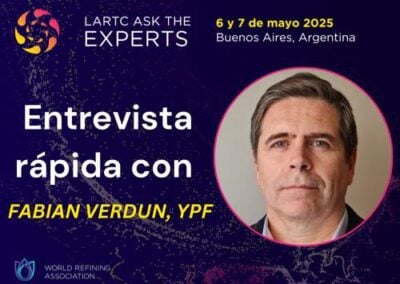
Quick Fire Interview with Fabián Verdun, YPF
Find out more about Fabián Verdun's involvement at LARTC: Ask The Experts. Read More

Evaluating New Opportunities in North American Downstream
Ahead of NARTC 2024, take a deep dive into how investors in North American refineries are tackling adversarial winds and evaluating new opportunities. Read More
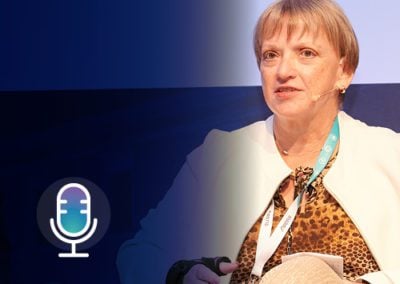
WRA Interview Series | Kim Jooste, MOL Group
Hear from Kim on how MOL Group is adapting in the short-term to the COVID-19 outbreak including the status of current projects and turnaround schedules, as well as the Group’s long-term vision in the energy transition and which technological developments will hold the key to achieving a competitive edge. Read More
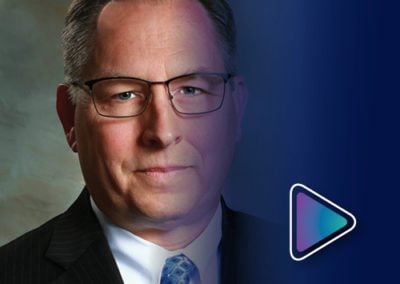
WRA Interview Series | John Gugel
The WRA’s goal is to support the refining industry and its transition to a sustainable future. We sat down with John Gugel, President & CEO of Honeywell UOP to discuss how COVID-19 has given the opportunity for refiners to rationalise their portfolios and refocus their strategies towards stronger assets. Read More
