
NARTC 2026
Refining Resilience in the Eye of Regulatory Uncertainty
Published 22 October 2025
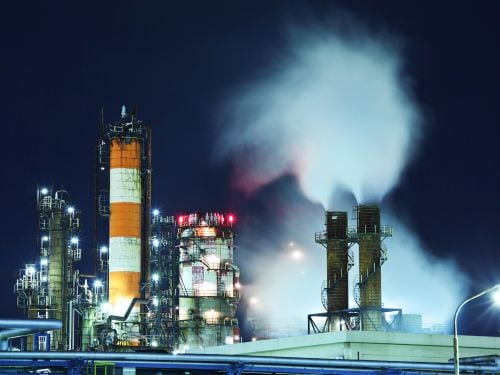
Six months ago, NARTC’s Advisory Board met in the week following President Trump’s announcement of sweeping tariffs on imports. The timing was significant, not only was it the beginning of a new administration, but it marked a period of heightened regulatory uncertainty. The board gathered to discuss how refiners could remain resilient amid shifting policy, economic volatility, and evolving market dynamics. You can read the key conclusions from the meeting here.
At the time, there was a cautious optimism – many expected clarity on energy regulation by the fall and Trump’s agenda focusing on generating jobs and investment in the U.S. was seen as potentially favourable for refining. Six months on, I checked-in with our Advisory Board, including senior leaders from Chevron, Marathon Petroleum, ExxonMobil, Par Pacific, Delek US, CITGO, HF Sinclair and more, to see how the industry has navigated this ambiguity and if their priorities have shifted at all.
– Elizabeth Cannon, Portfolio Director – Europe & North America, World Refining Association
“What’s changed since the Advisory Board meeting?”
This year, North America’s refining industry has experienced a period of continued adjustment as companies respond to persistent regulatory uncertainty and evolving market conditions. While tariffs have faded from the headlines, their impact remains and, in some cases, has intensified.
IOC’s have announced workforce reductions and internal restructures as part of broader efforts to streamline operations and focus CAPEX on higher-return activities. Several companies have scaled back their ambitions in renewable projects, citing investor caution and uncertainty surrounding the future of these markets. Instead, we have seen a renewed focus on reliability, efficiency, and operational excellence in conventional refining to reduce the cost-per-barrel and improve profit margins. Refiners have seen some improvement in diesel margins over the summer, providing some relief. However, oversupply in specialty products such as solvents and base oils continues to place pressure there.
As the industry continues to navigate this downturn, competitiveness remains a central focus. Many operators have already implemented cost reductions and efficiency measures, and now refiners are interested in discovering the next phase, looking at how to build long-term resilience once the initial efficiencies have been realised. So that, when market conditions improve, they are well-positioned to increase production.
“What are the industry’s top priorities?”
In this environment, strategy is leaning towards refining basics. Many refiners are maintaining a clear focus on their core hydrocarbon businesses whilst energy transition policy direction continues to be unfavourable. CAPEX is increasingly reserved for maintenance, not growth, ensuring processes are efficient, management systems are fit for purpose, and assets are well maintained to sustain revenue. The advice from our partners is to “use the downturn to prepare for the upturn” by addressing these fundamentals.
Looking at North America on the global stage, ongoing refinery closures in Europe may create opportunities for North American refiners to strengthen their position, provided they can remain agile, responsive and continue their energy exports across the board in a wider fashion. The ability to adapt to shifts in crude supply and changing product demand will be critical. While refinery configurations limit flexibility, investing in technologies and processes that enable dynamic adjustment can help operators respond more effectively to market changes. Regardless of conditions, the priority should be to run reliably, efficiently, and safely to ensure readiness when markets improve.
“What are the characteristics of top-performing refiners in North America?”
The characteristics that define the most successful refiners are a strong cost discipline, efficient operations, and effective asset utilisation. The best performers maintain competitiveness across these key metrics and importantly, sustain this discipline throughout market cycles, avoiding the tendency to ease cost controls during an upturn.
Efficiency extends beyond energy performance to wider operational effectiveness, including labour, maintenance, turnaround management and performance optimisation. In a competitive commodity market, maintaining a low cost per barrel remains essential to long-term resilience. However, cost management must be balanced with capability. Workforce reductions have created competency gaps and there is a smaller talent pool available to join the industry. Closing this gap through structured training and faster time-to-competency will be key to sustaining future performance.
At the same time, refiners are looking beyond traditional efficiency measures to identify new sources of value. A growing number are exploring opportunities to integrate with adjacent businesses in trading, mobility, and retail, strengthening the downstream value chain. By leaning into their natural advantages, whether geographic position, access to feedstock, or operational scale, refiners can create circular business models that not only enhance competitiveness but also contribute to a more sustainable future for the industry.
“What about renewables & energy transition projects?”
Over the last couple of years, the excitement surrounding renewables has waned. While there have been some developments, such as progress on the revised LCFS, PTC and BTC, further clarity is still needed. The lack of consistency has created hesitation amongst investors, limiting the ability and incentive for refiners to commit to new renewable projects or expansions. In several cases, smaller renewable facilities have closed, or changed output, reflecting the limited financial support currently available. It will likely take time before renewed confidence translates into new projects and many acknowledge that long-term viability cannot depend solely on subsidies.
Companies still active in the space are prioritising cost reduction, particularly in pre-treatment and feedstock management, to attempt to remain competitive. The SAF market remains uncertain, with limited demand growth and several facilities halting/repurposing operations due to poor margins. The broader sentiment across the industry underscores the need for stability and clear policy frameworks to enable confident investment and long-term planning. While the U.S. faces significant headwinds, Europe continues to drive activity in SAF through joint ventures and cross-border collaboration, demonstrating that consistent policy support remains the most effective enabler of progress in renewable fuels.
In conclusion,
For NARTC, these developments provide valuable context for shaping the discussions and priorities of the upcoming conference. With Call for Papers now closed and the Advisory Board having reviewed submissions, the agenda will reflect the challenges and opportunities currently defining North American refining.
As companies begin reinvesting and planning their 2026 budgets, there is a sense that the market could look quite different by the time NARTC arrives in February 2026. The conference will offer a platform to explore how refiners can strengthen competitiveness, enhance operational reliability, and prepare for the eventual upturn. Our core focus will be to equip the North American refining industry with the strategies, partnerships, and technologies needed to operate more efficiently, build long-term resilience, and navigate the next year ahead.

February 10 – 12, 2026 | Houston, Texas
DRIVING RESILIENCE IN NORTH AMERICAN REFINING